
How to build a digital presence that generates results: the fundamentals of online visibility
Website, social media, or ads? Learn how to combine these channels so your online presence brings sales, not just likes.
Digital Marketing · 02 February 2026
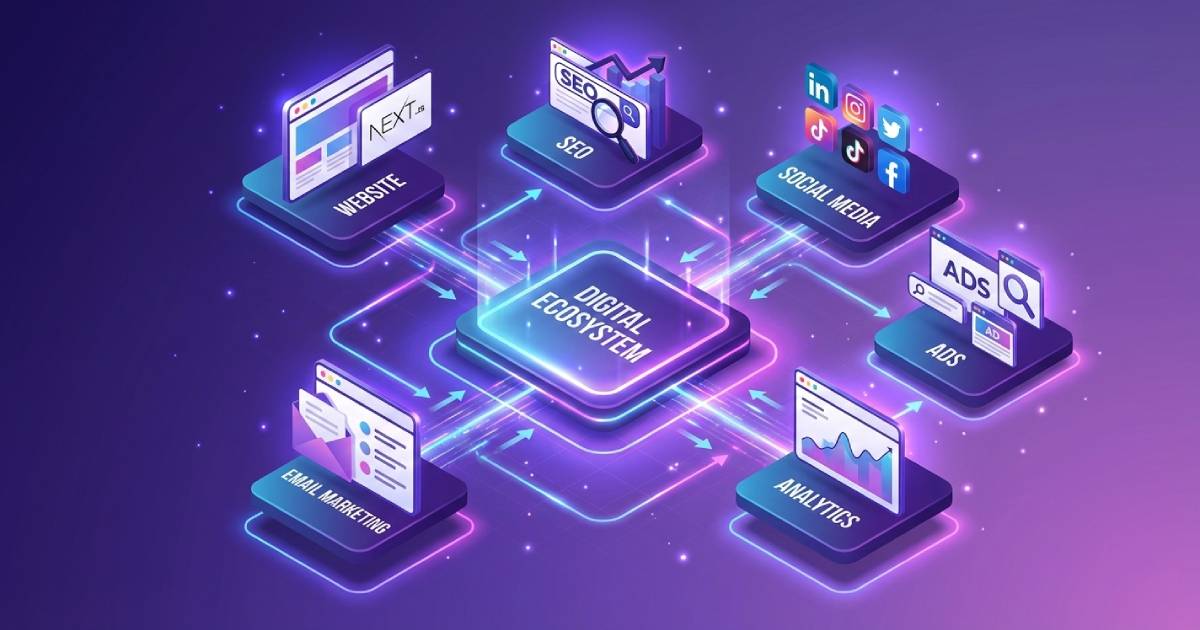
The best product doesn't sell if your audience doesn't know you exist. And in 2026, being visible online means customers can find you, understand what you offer, and choose you.
Many entrepreneurs think a Facebook page or a website launched and forgotten is a digital presence. A business is visible when the website, social media content, and distribution (ads and SEO) work together.
Below we go through each part, from the website to email marketing.
1. The website: the base of your online presence
However popular a social network becomes, the website remains the only digital property you 100% own and control. Social media is "rented land": algorithms change, accounts can be restricted, and organic reach is constantly dropping.
Your website needs to do three things:
A. Technical performance (speed and stability)
Users have no patience. As we detailed in previous articles, we use Next.js so pages load fast. A slow site is invisible because users leave before it loads, and Google penalizes it in rankings.
B. Clarity and conversion
Once on the site, the visitor must understand in 3 seconds:
- What do you offer?
- Who are you targeting?
- What should they do next? (Call to Action)
Design has to lead the visitor, without effort, to the "Buy" or "Contact Us" button.
C. Mobile optimization
Most web traffic comes from phones. If your site isn't designed for mobile first, you lose most of your visitors before you even begin.
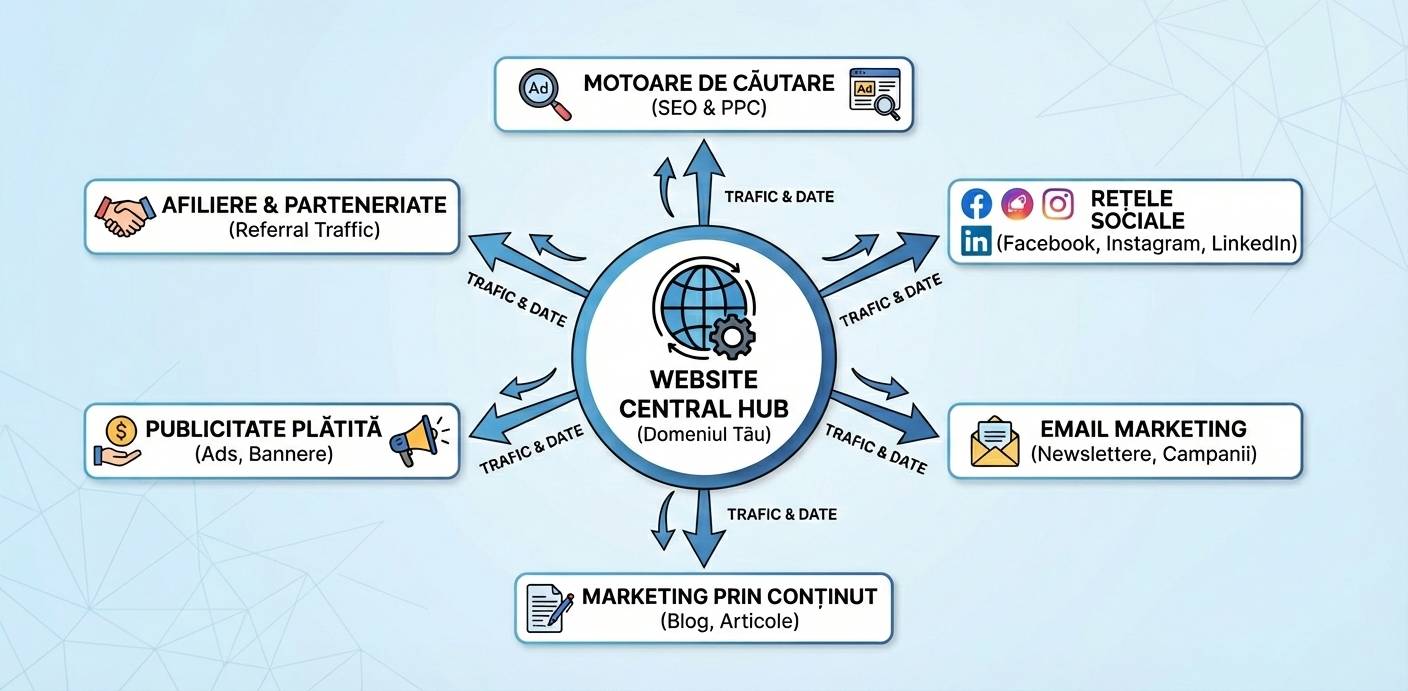
2. Social media: from noise to community
Besides accounts, you need a strategy. On social networks you gain visibility by building relationships with your audience, not by bombarding it with offers.
How to choose the right platforms?
Don't waste energy being mediocre across all channels. Choose 1-2 platforms where your audience is:
- LinkedIn: mandatory for B2B. This is where you build authority, partnerships, and find corporate clients.
- Instagram / TikTok: essential for B2C, visual brands, fashion, HoReCa, or services requiring visual demonstration.
- Facebook: still relevant for local communities (groups) and older audiences.
What and how should you post? The 80/20 rule
A common mistake is turning your page into a billboard. Algorithms penalize content that only "asks" and doesn't "give."
- 80% educational and entertainment content: useful tips, behind-the-scenes, team story, case studies, niche humor. This content grows your organic presence.
- 20% sales content: direct offers, product launches, promotions.
Frequency: it is better to post consistently 3 times a week than 10 times in one week and then disappear for a month.
3. SEO: being found exactly when the customer needs you
Advertising interrupts the user; SEO (Search Engine Optimization) answers their need. When someone searches for "fast web development" or "accounting services Cluj", they have a clear purchasing intent.
SEO has two parts:
Technical SEO
Refers to site health: loading speed (Core Web Vitals), security (HTTPS), URL structure, and proper indexing. At Prezent Digital, we solve these during development, through the Next.js architecture.
Content SEO
Google rewards complete answers. An active blog (like this one) helps the site rank for hundreds of relevant keywords. Articles that answer your clients' frequently asked questions position you as an expert and bring long-term free traffic.
4. Paid advertising (PPC): the growth accelerator
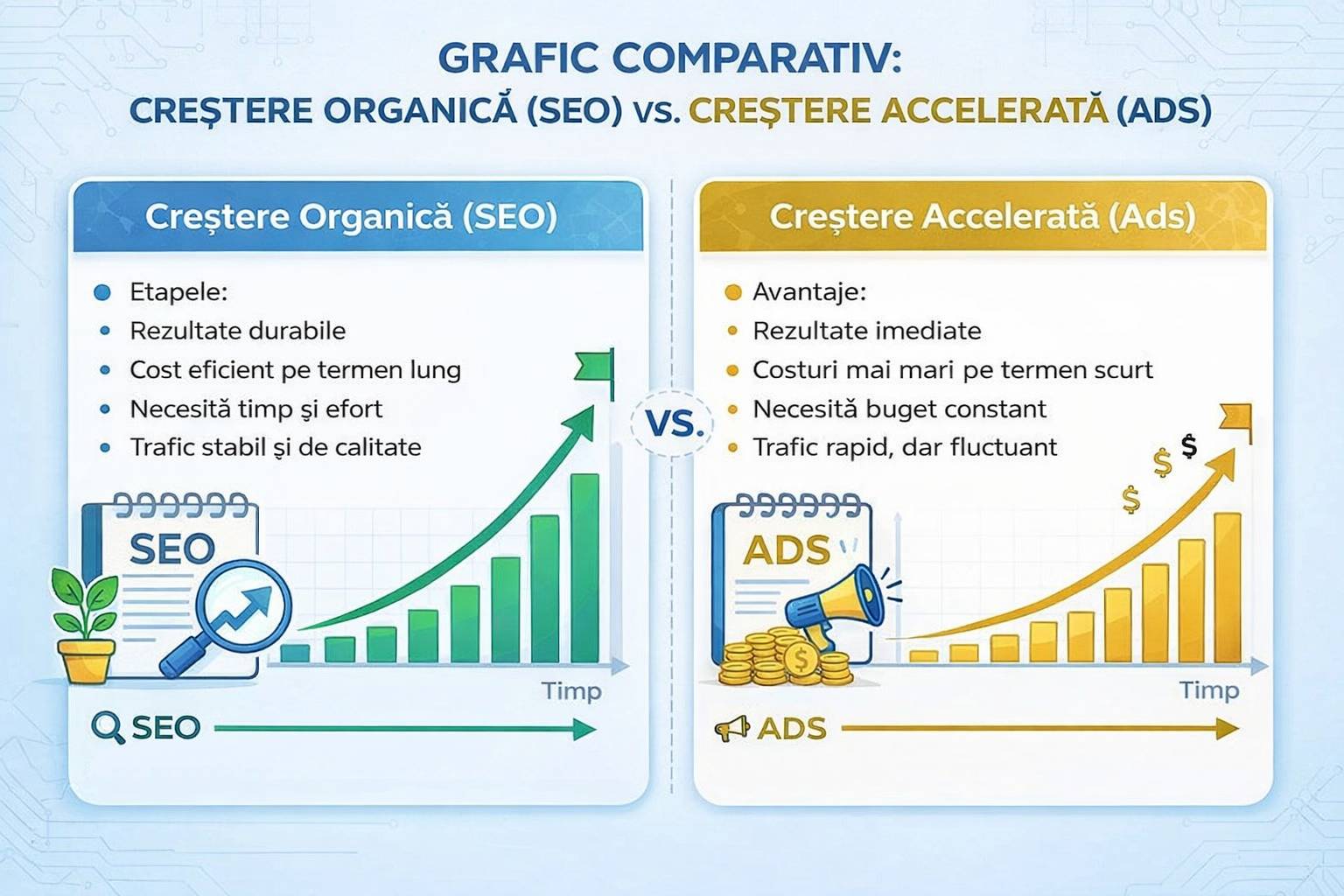
SEO and organic growth take time. If you need visibility right away, paid advertising is the solution.
- Google Ads (Search): captures existing demand. You pay to appear in front of those actively searching for your services. The conversion rate is high, but the cost per click can also be high.
- Meta Ads / TikTok Ads (Discovery): generates demand. Ads appear in users' feeds based on their interests. It is ideal for increasing brand awareness and for impulsively bought products.
- Retargeting: you show ads only to those who have already visited your site but haven't purchased.
5. Google Business Profile: master the local market
If you have a physical location or serve a specific area, you need a Google Business Profile (formerly Google My Business): it's how you appear on Google Maps.
To get the most out of it:
- Fill in all details (schedule, phone, website).
- Add real photos of the location or the team.
- Ask for reviews. Reviews weigh heavily in new customers' decisions. Reply to every review, whether positive or negative.
6. Email marketing: audience retention
Many businesses focus only on attracting new customers and ignore the old ones. Email marketing remains the channel with the highest ROI (Return on Investment).
An email list belongs to you. If Facebook changes its algorithm tomorrow, you can still send offers to your subscribers. Use newsletters to educate and keep the brand Top of Mind for your customers.
Conclusion
Online visibility is built over time, from good technology and a content strategy that work together.
You don't have to do them all at once. Start with the foundation: a fast, secure, and optimized website (what we do at Prezent Digital). Then, build the upper floors: content, social media, and advertising.